

A paid ads agency can manage campaigns across Google, Meta, TikTok, and Amazon, but platform access is only one part of the work. Services may also cover account setup, audience and keyword research, ad creative, tracking, budget management, testing, and ongoing optimization. Fees and onboarding depend on the agreed scope and campaign structure.
It makes sense to look beyond the platform list. Campaign performance depends on measurement, creative, landing pages, and the decisions made from results. This guide explains what an agency manages, how it plans and improves campaigns, which services may be included, and what to clarify about pricing and onboarding. You’ll also learn what information an agency needs to build a clear plan, so you can assess the work before committing ad spend.
Key Takeaways
- Choose platforms based on your audience, business model, and measurement capacity, not on how many channels an agency lists.
- Campaign planning should connect targeting, creative, landing pages, budgets, and conversion tracking so optimization decisions use reliable signals.
- An account audit can expose tracking gaps, wasted spend, and structural issues before inherited campaigns are scaled or rebuilt.
- Agency fees and minimum spend depend on scope, channel count, creative needs, and the work required during onboarding.
- Clarify who handles strategy, campaign execution, reporting, and optimization so responsibilities do not disappear between teams.
Which platforms do you run paid media on?
Platform choice depends on where buyers search, browse, and make decisions. A useful plan connects paid media with your website, search visibility, and existing marketing instead of treating every channel in isolation.
Paid Search and PPC
Paid search places advertising beside relevant search results. In pay-per-click advertising, advertisers pay when users click an ad or visit a website. Google Ads and Bing can capture demand from people already looking for a product or service. Campaigns require keyword selection, relevant ad copy, budget and bid management, and a landing page that matches the search.
Paid social works differently. Meta ads can reach audiences based on platform activity and campaign settings, while search ads respond to a query. A strong channel plan gives each a clear role: search captures existing intent, while social can introduce an offer or reconnect with visitors. Compare channels against the same business outcome, such as qualified inquiries or completed purchases.
Search Ads and Emerging Platforms
Search advertising can extend beyond Google Ads and Bing when the audience uses other search platforms. Emerging channels may also include TikTok or Amazon, depending on whether people discover products through video or marketplace searches. Adding a platform should solve a defined reach or demand problem, not simply expand the channel list.
Programmatic advertising buys digital placements across participating sites and apps. It can extend visibility beyond search and social, but placement volume alone does not demonstrate success. A paid ads agency should explain the audience, inventory, creative format, and conversion measurement behind each proposed channel.
Integration matters. Paid campaigns can send people to your product pages, service pages, or email sign-up forms. Earned visibility, such as reviews or press coverage, can reinforce ad claims. Search engine optimization supports organic discovery, while paid search can cover queries where organic visibility is limited. For example, an ad for a specific service should lead to a page about that service, not a generic homepage.
Assess case studies by checking the client’s business model, channel, starting conditions, campaign period, and reported outcome. References are most useful when they explain the agency’s role and how results were measured. Be wary of presentations focused on clicks or impressions without linking them to qualified leads, purchases, or another business goal. Vague ownership of results and unclear reporting also make performance difficult to evaluate.
Search, social, and programmatic campaigns should support the same commercial objective. The right mix depends on buyer behavior, the website experience, and whether measurement can distinguish platform activity from actual business results.
PPC strategy, campaign setup, and optimization
A PPC strategy turns business goals into campaign structure, targeting, and measurement. Each setup decision affects the traffic you attract and how you assess its value.
PPC Strategy and Campaign Setup
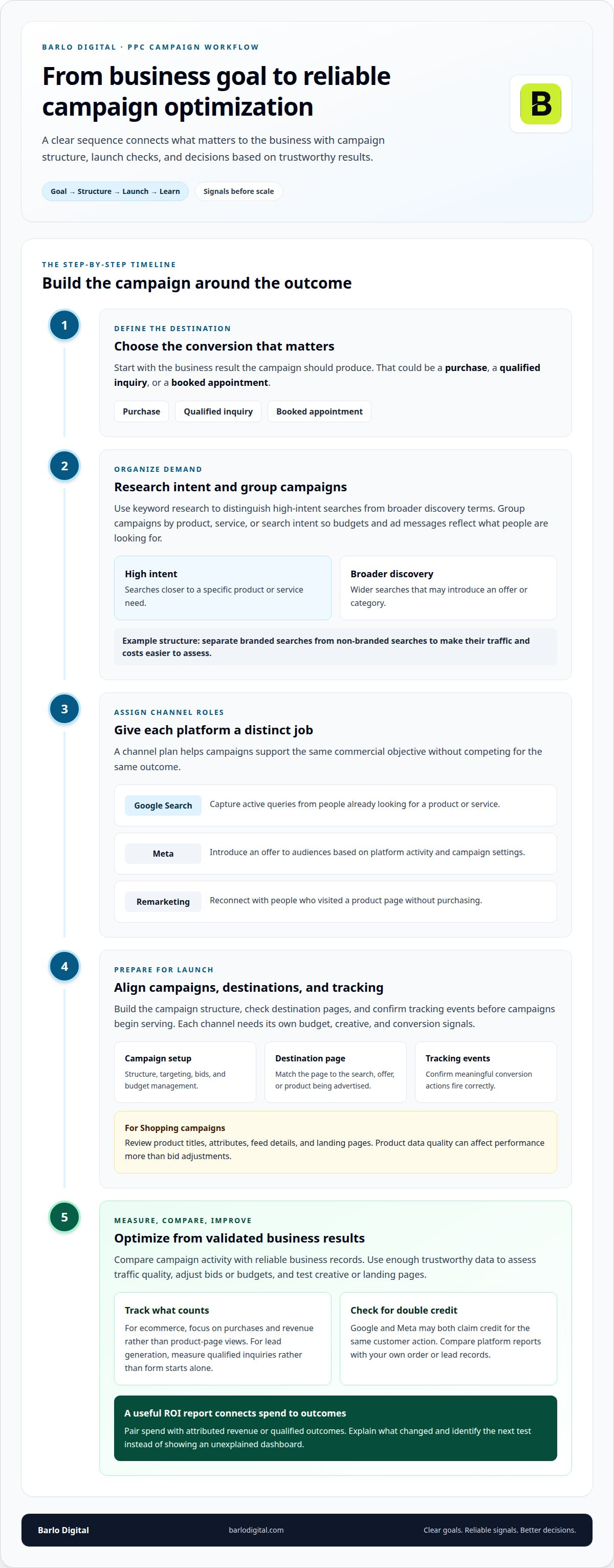
Start by defining the conversion that matters: a purchase, qualified inquiry, or booked appointment. Keyword research can then distinguish high-intent searches from broader discovery terms. Group campaigns by product, service, or search intent so budgets and ad messages match what people are looking for.
Setup includes campaign and ad creation, bid and budget management, and a testing plan. For example, separating branded and non-branded searches makes their traffic and costs easier to assess. Targeting should reflect your ideal customers, not simply maximize impressions or clicks.
Channel Architecture and Campaign Launch
Channel architecture gives each platform a distinct role and helps prevent campaigns from competing for the same outcome. A launch plan might assign Google Search to active queries, Meta to audience discovery, and remarketing to people who visited a product page without purchasing. Each channel needs its own budget, creative, and conversion signals.
Before launch, build the campaign structure, check destination pages, and confirm tracking events. Shopping campaigns can be affected by the quality of their product data. Feed details can affect Shopping performance more than bid adjustments, so review product titles, attributes, and landing pages before scaling traffic.
Campaign Measurement and ROI Reporting
Measurement connects ad activity to business outcomes. Define conversion events, confirm they fire correctly, and distinguish meaningful actions from low-value activity. For ecommerce, purchases and revenue matter more than product-page views. For lead generation, measure qualified inquiries rather than form starts alone.
Platform reports can overstate total conversions when Google and Meta both claim credit for the same customer action. Compare platform data with your own order or lead records. A useful ROI report pairs spend with attributed revenue or qualified outcomes, explains changes, and identifies the next test rather than presenting an unexplained dashboard.
Launch Timelines and Results
How long does launch take, and when do results appear? Timing depends on account access, campaign complexity, tracking readiness, creative, and approval speed. A focused search campaign with working measurement has fewer setup dependencies than a multi-channel launch requiring new assets and product-feed corrections.
Initial traffic and conversion signals appear once campaigns begin serving, but optimization requires enough reliable data to compare targeting, ads, and landing pages. The team can then assess traffic quality, adjust bids or budgets, and test creative. Shopping campaigns may need feed fixes before bid changes can help; draw ROI conclusions from validated conversion data, not clicks alone.
Account audits and inherited account management
An existing Google Ads account can contain useful history as well as costly errors. An audit identifies what is working and what only appears active. It should examine campaign structure, search terms, targeting, bids, budgets, conversion tracking, and landing pages. The goal is a prioritized diagnosis, not an automatic full rebuild.
Start with measurement. Compare Google Ads and Meta conversion records with actual orders or qualified inquiries. The platforms may both claim the same conversion, making their combined totals exceed the business’s real outcomes. Then check whether key actions are tracked consistently, low-value events are inflating performance, and revenue or lead quality informs campaign decisions.
Next, review how the account is built. Search terms can reveal irrelevant traffic, duplicated campaigns can split budget and data, and weak landing-page alignment can hurt conversion rates. Connect each finding to a decision: exclude a search query, restructure a campaign, repair tracking, or leave a stable asset untouched. Every change needs a reason and a way to measure its effect.
In-house management can work when your business has the time, platform knowledge, and clear ownership needed for analysis and implementation. An external partner can add execution capacity and cross-account perspective, but a handoff will not solve unclear goals or unreliable measurement. Before management begins, decide who controls budgets, approves changes, reports results, and handles creative or website dependencies.
Allocate budget according to business value, not platform preference. A campaign producing profitable orders may warrant protection, while a channel generating traffic without qualified conversions needs investigation. Distribute spend by campaign purpose, audience, and observed performance, while accounting for seasonality, inventory, and sales capacity. Avoid reacting to short-term changes without enough context.
Management fees may be a flat retainer or a share of advertising spend. The structure matters less than the work it covers: account analysis, implementation, optimization, reporting, and communication. Clarify whether creative, tracking fixes, or landing-page work are separate. A low fee can leave critical tasks unowned, while a higher fee alone does not prove senior execution or profitability.
How do you choose the right partner? Match experience to your business model and channels, then assess how the team explains measurement, budget decisions, and account ownership. For trade and construction firms, partnering with a specialized agency like H&A Marketing helps ensure campaigns reflect specific industry buying cycles and lead qualification needs. Ask for case studies with comparable goals and clear methods, not just impressive results. Confirm who handles strategy and daily optimization; senior-level access matters when account changes can affect profit across brands and industries.
For an existing account, a useful next step is a written audit that ranks risks, preserves valuable campaign history, and assigns each corrective action an owner. That gives your business a factual baseline for deciding whether to optimize, rebuild, or keep management in-house.
Agency pricing, minimum spend, and onboarding
Pricing reflects the work required, not just advertising spend. Before authorizing a launch, compare the fee model, campaign scope, onboarding responsibilities, and account control.
Agency Pricing Models and Costs
Common models include a flat retainer, a percentage of advertising spend, or project-based work. A retainer makes the management fee predictable; project pricing can suit a defined task, such as an account rebuild. Compare what the work includes: strategy, campaign management, creative, testing, reporting, and any separate tracking or landing-page support.
For managed campaign work, pricing depends on the scope and is provided after a quote request. Channels, creative production, and measurement needs affect the cost. Put the deliverables in writing. A fee that excludes essential testing or reporting can leave gaps, even when the headline figure seems straightforward.
Percentage-of-Ad-Spend Pricing
With percentage-based pricing, the management fee rises or falls with the advertising budget. This can align the fee with campaign scale, but increased spend may also raise agency compensation without demonstrating better performance. Ask how the percentage is calculated, which media costs count, and whether a minimum fee applies.
Compare the pricing model with the actual workload. A small campaign may still require substantial setup, creative, and measurement work; a larger account may need more channel coordination. The agreement should explain how budget changes affect fees and who approves each change.
Minimum Spend Requirements
A minimum ad budget should reflect what it takes to run the planned campaigns and gather useful performance signals. It should follow the target audience, channel, competition, and conversion value, not an arbitrary promise of fast results. For example, a plan using Google Search and Meta should assign a budget to each channel’s distinct role.
Separate advertising budget from management fees and production costs. During onboarding, define the total approved spend, who controls platform budgets, and how changes are authorized. A sensible launch plan also explains what happens if early traffic is too limited for meaningful testing.
Contract Terms and Account Ownership
What contract terms and ad account ownership should you check? Confirm the service scope, billing structure, contract length, cancellation process, reporting responsibilities, and ownership of creative and campaign data. Your business should retain access to its advertising accounts, with clear agency permissions and an orderly process for ending the engagement.
Before signing, establish who owns the launch checklist, approvals, tracking setup, and ongoing optimization. The agreement should name who makes budget decisions and explain how unfinished work is handled if the relationship ends. Clear terms help prevent disputes over access, data, and campaign responsibilities.
PPC agency services and responsibilities
A campaign can generate clicks while essential work remains unassigned. A clear scope names who is responsible for audience strategy, account management, creative, analytics, and reporting. Each task should have an owner and connect to a measurable business outcome.
Planning, Creative, and Campaign Management
A paid media team translates business goals into channel plans, audience targeting, campaign structure, and testing priorities. On Google Ads, that might mean organizing search campaigns around services and intent. On Meta, it might mean developing audience-focused creative and testing distinct messages. Each ad should lead to a relevant landing page and conversion goal.
Creative is an operating responsibility, not a decorative add-on. Someone must brief, produce, review, and refresh ad creative and UGC as performance changes. For example, a campaign promoting a specific service needs copy and imagery that match the service page. If production sits outside the management scope, define who supplies assets and how approvals affect campaign timing.
Day-to-day account work includes monitoring delivery, reviewing search terms or audience response, managing bids and budgets, and making controlled changes. A focused optimization process records what changed and why. Without that record, frequent edits make it difficult to identify which decision affected lead quality, revenue, or conversion performance.
Measurement and Business Outcomes
Analytics should connect platform activity to outcomes your business values. Ecommerce reporting can compare advertising spend with tracked purchases and revenue. Lead generation reporting should distinguish qualified inquiries from low-intent submissions. The agency should explain what the data shows, identify its limitations, and recommend a specific next test.
Attribution needs particular care. Google Ads and Meta may both claim credit for one conversion, so adding platform totals can overstate results. A useful report compares channel data with business records and defines the conversion events being used. It should present trends, spend, and outcomes together, rather than treating impressions or clicks as proof of commercial impact.
Coordination and Accountability
Campaign performance also depends on work beyond the ad account. Landing-page changes, website analytics, product information, sales follow-up, and creative approvals can all affect results. The agency should identify these dependencies, state what it owns, and communicate when another team needs to act. For a local service campaign, a qualified call matters more than an unqualified click.
Before work begins, document who sets strategy, approves budgets, manages creative, implements tracking, and reports performance. A senior point of accountability should be able to explain decisions directly. Clear ownership keeps campaign work connected to business priorities.
Barlo Digital
Barlo Digital helps US businesses connect paid campaigns with reliable measurement and the website experience behind each conversion. We support businesses assessing campaign management, tracking gaps, or search visibility across ecommerce and local marketing.
Our work includes ecommerce advertising on Meta, Google, and TikTok, ecommerce tracking and measurement audits, and local SEO and AI search. A director oversees every account, with senior-level work and no junior handoff or account-manager layer.
The right starting point depends on your immediate constraint: campaign management, measurement, or search visibility. Setting a clear priority gives the work a purpose and keeps activity tied to a business goal.
Make the Next Move Based on Your Numbers
Choose your next move by identifying the business constraint paid campaigns can address. Clarifying the desired outcome, your team’s capacity, and the work that needs outside support gives a paid ads agency a practical brief.
Barlo Digital works with businesses seeking paid campaign management, stronger measurement, or better search visibility. Start with the issue affecting your growth decisions now, rather than a broad list of marketing tasks.
If you’re ready to discuss that priority, contact Barlo Digital about your paid media needs. Bring the business question you need answered, and we can discuss a relevant next step.
Frequently Asked Questions
How do you benefit from Paid Advertising?
Paid advertising puts offers in front of people based on search intent, platform activity, or audience criteria. A retailer, for example, can promote a product to shoppers, while a local service business can appear in relevant search results. Campaigns also show which messages attract responses. That information can guide decisions about offers, landing pages, and where to invest marketing resources next.
What deliverables should I expect from a PPC agency?
Expect working campaign assets and a clear record of management decisions. Depending on scope, deliverables may include campaign structure, ad copy, audience settings, keyword and negative keyword lists, creative briefs, tracking specifications, and performance reports. A useful report identifies campaigns that drove valuable actions and explains what the team plans to change. Confirm the format, frequency, and owner of each deliverable before work begins.
What services does a paid ads agency provide?
A paid ads agency may manage account strategy, campaign setup, ad creation, audience or keyword targeting, budgets, testing, analytics, and reporting. Some engagements also include creative production, landing-page work, tracking repair, or account audits. Be clear about boundaries: an agency managing ads may not own website changes or sales follow-up. Define what is included and who handles dependencies that affect conversion quality.
What pricing models do paid advertising agencies use?
Common arrangements include a monthly retainer, a percentage of media spend, project fees, or hourly consulting. The pricing model tells you how the agency bills, not what the engagement covers. Compare the defined work, billing basis, included channels, creative responsibilities, and how extra requests are handled. Keep the agency’s management fee separate from the advertising budget paid to platforms.
How do paid ads agencies compare with in-house teams and freelancers?
An in-house team can stay close to products, sales, and internal approvals, but requires dedicated time and platform expertise. A freelancer may handle a specific channel or task. Depending on its scope, an agency such as Fireheart Digital can combine strategy, campaign operations, and reporting across channels. The best fit depends on your team’s existing skills, workload, and capacity for internal coordination.
Which platforms do paid ads agencies manage, such as Google Ads and Meta Ads?
Platform coverage varies by agency and business need. Common options include Google Ads for search and shopping, Meta Ads for Facebook and Instagram placements, TikTok for video-led campaigns, and Amazon Ads for marketplace products. Some teams also manage Microsoft Advertising or programmatic placements. Choose platforms based on customer behavior and measurement needs. Adding one creates work and budget requirements, not automatic reach or revenue.
What results and ROI should I expect from a paid ads agency?
Set expectations around business outcomes, not a promised return. An ecommerce team might track purchases, revenue, and new-customer performance; a service business may focus on qualified calls, booked estimates, or completed jobs. Agree on the conversion definition, reporting source, and review cadence before launch. Results depend on the offer, market, website, follow-up, and campaign execution, so assess performance against your economics and operating capacity.
What questions should I ask before hiring a paid ads agency?
Ask who will lead the work, what the fee includes, how account access is handled, and what reports will show. Request a clear explanation of how the team defines a qualified conversion and responds when tracking data conflicts with sales records. Also clarify how approvals, creative, and website changes fit the workflow. These answers show whether responsibilities are clear before advertising begins.

Article by
Carlos Benavides
Carlos Benavides founded Barlo Digital and is its Director of Paid Media and Performance. He has fifteen years in direct-response marketing, more than $50M in lifetime ad spend, and a B.S. in Computer Science, which is why tracking at Barlo Digital is built by hand. Barlo Digital is a director-led paid media and search agency serving US ecommerce brands, home-service companies and practices.


