

The wrong channel can make a sound offer look like a bad investment. Paid media advertising works when the audience is reachable there, the message fits the format, and conversions can be measured against business value.
It’s reasonable to ask where to start. Search, social, video, and marketplace ads behave differently: some capture existing intent, while others build awareness or reach shoppers close to purchase. Choosing by platform popularity or cheap clicks alone can send budget toward activity that never becomes revenue, qualified leads, or appointments.
This guide explains how paid media fits into the wider marketing mix and how to compare channels by audience behavior, intent, creative requirements, and measurement readiness. You’ll learn what each channel can contribute, what to assess before spending, and how to connect campaign data to outcomes that matter. The goal isn’t to be everywhere. It’s to choose a channel your business can support, track, and improve.
Key Takeaways
- Choose paid media advertising based on the business outcome you need, not platform popularity or cheap clicks.
- Compare channels by audience intent, discovery behavior, creative demands, and measurement needs.
- Map the campaign path from objective to audience, placement, creative, destination, and measurement before launch.
- Check conversion tracking and campaign economics before judging whether a channel is working.
- Use a focused test to assess channel fit, then refine the creative and measurement based on business results.
What Paid Media Advertising Includes, and What It Does Not
Paid media is promotion distributed through placements an advertiser pays for. It includes search listings, social posts, video ads, marketplace placements, and display ads. The defining feature is payment for distribution, not the format or platform. Paid placement buys exposure; organic reach builds visibility without paying for that specific placement.
This distinction matters because paid and organic content can look similar. A promoted social post and an unpaid post may appear in the same feed, but their distribution mechanics and budget implications differ.
Paid, owned, and earned media: where each fits
These categories describe how content is distributed and controlled. They can work together: paid campaigns often direct people to a company’s owned pages, while useful owned content can prompt third-party sharing and discussion.
| Media type | Control | Distribution | Typical examples |
|---|---|---|---|
| Paid | Advertiser pays for placement and sets campaign parameters. | Delivered through purchased advertising inventory. | Search ads, paid social, sponsored marketplace listings |
| Owned | Business controls the asset, subject to its platform or hosting terms. | Published through channels the business operates. | Website, product pages, email newsletter |
| Earned | Business has limited control over third-party coverage or sharing. | Others choose to mention, recommend, or share it. | Press coverage, customer reviews, organic recommendations |
A paid campaign might send a searcher to a product page, a social user to a landing page, or a video viewer to an explainer on the company website. The ad buys the opportunity to reach an audience; the destination and its content remain owned assets. Earned exposure can reinforce the message, but it doesn’t replace control over the campaign’s audience, placement, and spend. For a broader overview of the distinction, see What is Paid Media?
Paid media advertising versus PPC
Paid media advertising is the wider category. PPC, or pay-per-click, describes advertising where the advertiser is charged when someone clicks. Search ads are a familiar example: an ad may appear for a relevant query, and the advertiser pays when a user clicks it. The click is a billing event, not proof of a lead or sale.
Not every paid placement is PPC. A paid social campaign may be billed by impressions, video views, or another placement model. For example, a business could pay to show a video ad in a social feed even if viewers don’t click through. That exposure can support awareness, while a search ad may be designed to capture existing demand. Neither billing structure, by itself, establishes business impact.
CPC means cost per click, the amount charged for a click. CPM means cost per thousand impressions, or ad displays. These terms describe how media is priced, not guaranteed performance. To judge value, connect the placement and its cost to what happens after exposure: qualified visits, inquiries, purchases, or another defined business result.
How Paid Media Advertising Moves from Audience to Outcome
Campaigns lose direction when the platform is chosen before the job is defined. Set the objective before selecting a platform, or you risk buying attention that cannot be tied to a business result.
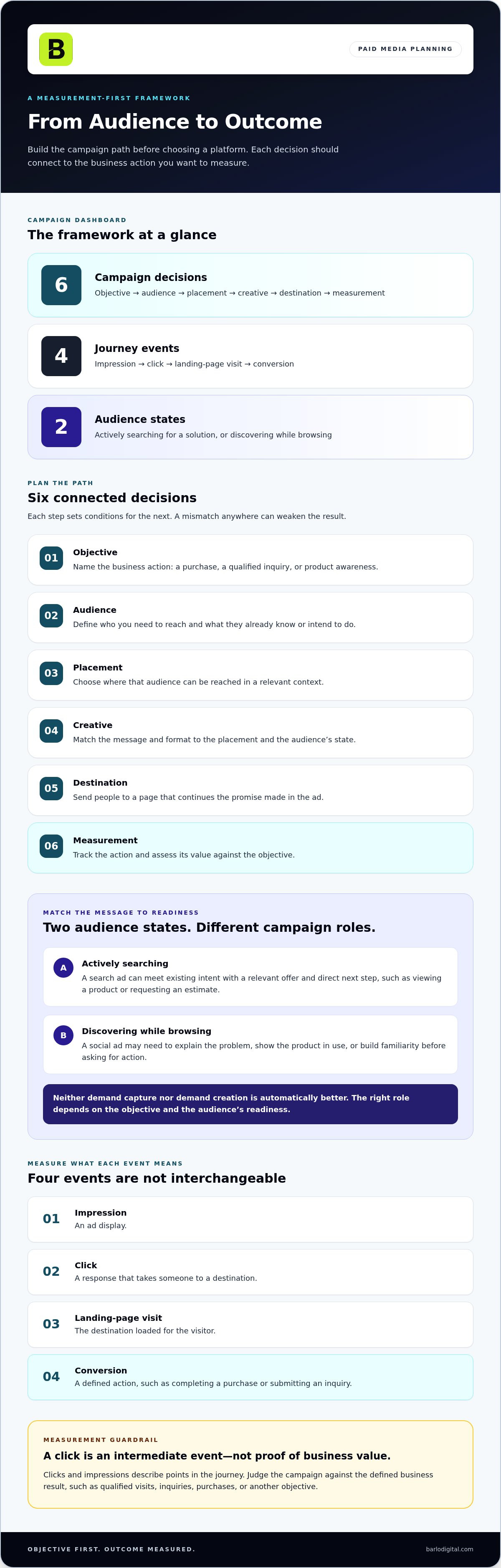
Use this sequence to make the campaign logic visible:
- Objective: Name the business action you want, such as a purchase, a qualified inquiry, or product awareness.
- Audience: Identify who you need to reach and what they already know or intend to do.
- Placement: Choose where that audience can be reached in a relevant context.
- Creative: Match the message and format to the placement and audience state.
- Destination: Send people to a page that continues the promise made in the ad.
- Measurement: Track the action and assess its value against the objective.
Each step sets conditions for the next. A mismatch anywhere in the chain weakens the result: a useful ad can send visitors to an irrelevant page, while a well-designed landing page cannot repair an offer shown to the wrong audience.
Match the campaign objective to the audience’s state
Some people are actively searching for a solution. A search ad can meet that existing intent with a relevant offer and a direct next step, such as viewing a product or requesting an estimate. Others are discovering a product or service while browsing a social feed. That ad may need to explain the problem, show the product in use, or build familiarity before asking for action.
Neither demand capture nor demand creation is automatically the better choice. The right role depends on the business objective and the audience’s readiness. A purchase-focused message may suit shoppers already comparing products; a short demonstration may better introduce an unfamiliar item. For lead generation, the requested action should also fit the level of trust established by the ad.
Understand the path from impression to conversion
An impression is an ad display. A click is a response that takes someone to a destination. A landing-page visit means the destination loaded for the visitor. A conversion is a defined action, such as completing a purchase or submitting an inquiry. These events describe different points in the journey, not interchangeable proof of value.
A click is an intermediate event. It doesn’t confirm that the visitor stayed, understood the offer, or became a customer. Creative affects who responds and what they expect; the website experience affects whether they can take the next step; measurement determines which actions are recorded and attributed. If tracking misses calls or form submissions, reports may understate lead activity. If the conversion is defined too broadly, they may overstate meaningful progress.
Before launch, specify the conversion event and verify that it reflects a real business action. Barlo Digital connects paid media campaign management with tracking and measurement, so platform activity can be assessed against outcomes rather than clicks alone.
Google, Meta, and TikTok Ads: Which Paid Media Channel Fits?
Channel choice is not a popularity contest. Google Ads can reach people expressing relevant search intent. Meta and TikTok place ads in social environments where discovery and creative play a larger role. The right fit depends on the offer, audience behavior, available campaign assets, and whether you can measure the action that matters.
Use this comparison to identify what each channel asks of your campaign, then test the strongest fit against your business objective.
| Channel | User intent and discovery | Creative needs | Measurement considerations |
|---|---|---|---|
| Google Ads | Can connect with people searching for a product, service, or solution. | Clear ad copy that matches the query and offer. | Assess relevant search terms, landing-page actions, and recorded conversions. |
| Meta Ads | Can introduce an offer to people browsing social feeds, including audiences not actively searching. | Visuals and messaging need to earn attention and make the offer understandable. | Compare creative and audience responses, then verify that desired actions are tracked. |
| TikTok Ads | Can present products or services in a discovery-oriented short-form video context. | A strong video concept should communicate quickly and suit the placement. | Review the role of engagement and site actions, while judging the campaign by its defined business conversion. |
When Google Ads may be the practical starting point
Search advertising may be a practical starting point when prospects actively look for what you sell. Keyword intent matters: a search for a specific service signals a different need from a broad research query. Check whether relevant searches exist, whether the ad promise matches the query, and whether the landing page answers that need. Search demand varies, so don’t assume every business has enough of it to support a campaign.
When Meta Ads or TikTok Ads may fit better
Paid social can suit offers that benefit from visual discovery, demonstrations, or a clear explanation before someone searches. Meta can support a range of visual concepts across its social placements; TikTok often calls for short-form video built around a direct hook or demonstration. Neither is automatically superior. Suitability depends on audience availability, the team’s ability to produce relevant creative, and tracking that connects ad exposure to meaningful site actions.
Match the creative to the job. A product demonstration can make an unfamiliar item easier to understand; a concise offer may work better for an audience already aware of the problem. Then ensure the landing page continues the same message. If the ad promises one thing and the page leads with another, the handoff creates friction and makes performance harder to interpret.
For paid media advertising, choose the platform only after checking the offer, likely audience behavior, and campaign assets. A channel can deliver impressions or clicks and still be the wrong choice if it cannot reach the intended audience or support a measurable business outcome. Start with the fit you can explain, execute, and evaluate.
How to Choose a Paid Media Advertising Channel Before Spending
A channel is a business decision, not a default setting. Before committing budget, establish what success means and whether the campaign can credibly reach, persuade, and measure the people who can produce it.
Use this sequence to narrow the options before launch:
- Define the business outcome. Specify the result that matters, such as a completed purchase, a qualified inquiry, or a booked appointment. Avoid vague goals like “more traffic” unless traffic itself is the intended outcome.
- Identify audience intent. Decide whether prospects are actively looking for a solution or need to discover the offer first. This helps distinguish a search-led opportunity from a campaign that must earn attention.
- Assess channel fit. Choose a platform where the intended audience can be reached in a context that suits the offer. Don’t assume every channel has enough relevant demand for your business.
- Check creative readiness. Confirm that you can produce an ad suited to the placement, whether that means concise search copy, strong social visuals, or short-form video.
- Validate conversion tracking. Make sure the action you care about can be recorded and connected to the campaign. Without a reliable signal, results are difficult to interpret.
- Review campaign economics. Understand what a useful customer or lead is worth to the business, then compare campaign costs with that value. A low-cost click alone is not evidence of a sound investment.
Decision rule: Choose the channel where audience intent and creative fit align, and where reliable measurement can show whether the campaign supports a business outcome.
Check whether the campaign can be measured
Pick the meaningful action before launch: a purchase, a qualified inquiry, or a booked appointment. Then confirm that the event is recorded consistently enough to guide campaign decisions. Tracking quality affects optimization and confidence in reported results. If the system counts the wrong action, platform reports can look active while offering little evidence of actual business value.
Set a realistic first test
Write down the hypothesis, audience, creative, destination, and success measure before spending. Keep the first test narrow enough to manage with the budget, data, and operational capacity available. If you change several variables at once, it becomes harder to identify what influenced the result. CPC and CPM can help diagnose the cost of clicks or impressions, but neither establishes profitability without downstream conversion and business-value data.
A test should answer a decision, not just generate activity. Decide what evidence would support continuing, changing the approach, or stopping. That keeps the next move tied to learning rather than platform habit.
Barlo Digital connects paid media management with tracking and measurement, helping businesses assess channel activity against defined outcomes.
A Measurement-First Approach to Paid Media Advertising
A channel decision is only as sound as the evidence used to judge it. The audience, placement, creative, and destination all shape campaign activity, but reliable tracking connects that activity to purchases, qualified leads, or pipeline. Without that connection, a platform report can look convincing while leaving the business question unanswered.
What to review beyond clicks and platform-reported conversions
Platform metrics show activity within an ad account. They don’t necessarily capture the full customer journey or match the business’s records exactly. Compare reported conversions with available sales, revenue, or lead records, and treat differences as a reason to investigate, not to assume one report tells the whole story.
Separate early indicators from business outcomes. Impressions, clicks, and landing-page visits can help diagnose delivery and engagement. Qualified inquiries, completed purchases, and pipeline show whether that activity is becoming commercially relevant.
- Check the action: Does the conversion event represent a real purchase, qualified inquiry, or other defined outcome?
- Compare the records: Where available, review tracked conversions alongside sales, revenue, or lead records.
- Read attribution carefully: Platform attribution is one view of customer behavior, not a complete account of every influence on a decision.
These checks don’t require perfect data before every campaign. They do require knowing what the data can and can’t support, so early indicators aren’t mistaken for revenue or lead quality.
Turn campaign evidence into the next decision
Measurement becomes useful when it changes what happens next. If ads attract clicks but few meaningful actions, review the promise in the creative, the relevance of the destination, and whether the conversion event is recorded correctly. If leads arrive but aren’t qualified, assess the offer and the criteria used to judge those leads. Let the diagnosis guide the next adjustment.
Barlo Digital manages paid campaigns across Google, Meta, TikTok, Local Services Ads, and Amazon, connecting campaign execution with tracking and measurement. Support includes ecommerce tracking and measurement audits, Measurement Rescue for tracking fixes, and call tracking. Ad creative, video assets, and UGC can support paid social execution; website design can improve the destination experience. These are campaign inputs to evaluate, not guarantees of performance.
A measurement-led approach keeps the decision chain intact: select a channel for a business reason, give it relevant creative and a suitable destination, then use trustworthy conversion evidence to guide optimization. Talk with Barlo Digital about connecting paid campaign management with measurement that reflects your business outcomes.
Make Your Next Campaign Decision With Evidence
The next step isn’t to add another platform. It’s to make the next decision easier to defend. Before committing more budget, agree on what the campaign must prove, which business records will validate that result, and what evidence would justify a change in direction.
That discipline keeps paid media advertising accountable to the business, not just to activity inside an ad account. It also gives your team a clearer basis for deciding whether to refine the offer, adjust the campaign, or redirect investment. No guesswork disguised as momentum. Just a decision tied to evidence.
Barlo Digital can connect campaign execution with measurement that supports practical next steps. Talk with Barlo Digital about measurement-led paid media and set a clearer standard for your next campaign.
Frequently Asked Questions
Is paid media advertising the same as PPC?
No. Paid media advertising covers paid placements across channels, while PPC refers to advertising charged by the click. The distinction matters when comparing campaign reports: a social video campaign might be billed by impressions, while a search campaign may charge for clicks. Neither billing method tells you whether the people reached became customers. Check the pricing model to understand media costs, then assess the campaign using the business action it was designed to support.
Can paid media work for a B2B business with a long sales cycle?
Yes, but a form fill may be only the first step, not evidence of a qualified opportunity. For example, a technical supplier could distinguish an initial inquiry from a sales-accepted lead and a later opportunity. Preserve lead-source details as the contact moves through the sales process, then compare campaigns with pipeline records when those records are reliable. This helps prevent a channel from appearing successful based only on low-intent submissions.
Do I need a website before running paid media advertising?
Not always, but you need a destination that explains the offer and supports the intended action. Depending on the campaign, that could be a website page or a suitable platform experience. Before launch, open the destination on a phone, check that key information is visible without unnecessary friction, and test the action yourself. A broken form, unclear next step, or mismatched offer can waste otherwise relevant visits.
How much should a business spend on paid media?
There’s no single budget that suits every business. Set a test amount based on the outcome you’re pursuing, the audience you can reach, the conversions you can reasonably observe, and your capacity to follow up. A lead campaign needs enough operational capacity to respond and qualify inquiries; an ecommerce test needs a way to assess completed orders. Define a review point in advance, then continue, adjust, or stop based on evidence.
What happens if conversion tracking stops working during a campaign?
The campaign may still deliver ads, but its reports can miss or undercount the actions you want to measure. Don’t treat a sudden drop in recorded conversions as proof that customer activity stopped. Mark when the tracking issue began, check whether the affected actions appear in your business records, and avoid making major optimization decisions from incomplete data. Once tracking is restored, consider the affected reporting period separately from normal campaign performance.
How often should paid media campaigns be reviewed?
Set a review rhythm that reflects how quickly the campaign spends and how much conversion data it can gather. Check routinely for delivery problems, broken destinations, or tracking interruptions. For performance decisions, avoid reacting to a handful of clicks or a brief fluctuation. Record changes to audiences, bids, or creative, and review the results against the same objective. That record helps distinguish a real pattern from noise caused by frequent edits.
What happens to paid media results when ads are paused?
While ads are paused, they stop generating new paid impressions and clicks. What happens after resuming can depend on the platform, campaign history, audience, and market conditions, so don’t assume performance will pick up exactly where it left off. Before pausing, save the campaign’s current settings and results, and note the reason for the decision. This creates a useful comparison later and helps separate a planned budget pause from a response to faulty tracking.

Article by
Carlos Benavides
Carlos Benavides founded Barlo Digital and is its Director of Paid Media and Performance. He has fifteen years in direct-response marketing, more than $50M in lifetime ad spend, and a B.S. in Computer Science, which is why tracking at Barlo Digital is built by hand. Barlo Digital is a director-led paid media and search agency serving US ecommerce brands, home-service companies and practices.


